The Credential Revolution: How Digital Verification Is Replacing the Paper Diploma
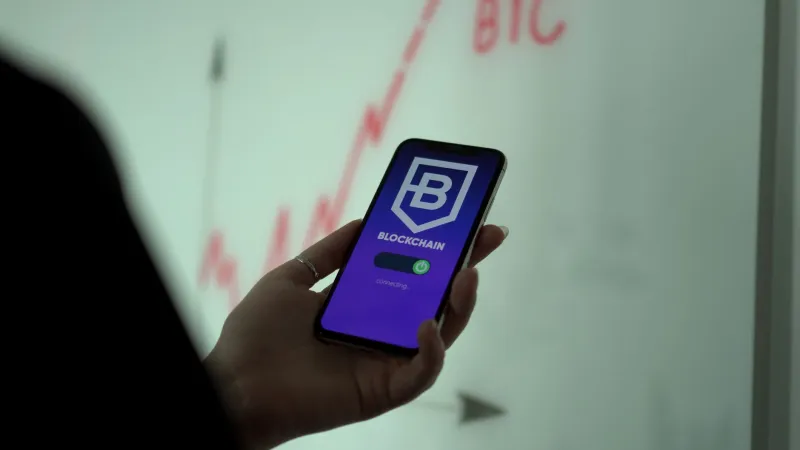
For generations, the paper diploma held an almost ceremonial authority. Framed on office walls, tucked into manila envelopes, and mailed across the country to prospective employers, it served as the definitive proof of educational achievement. Yet in an era defined by sophisticated document fraud, remote hiring, and a workforce that spans continents, that framed certificate is beginning to show its age.
Across the United States, a quiet but significant shift is underway. Organizations ranging from regional hospitals to Fortune 500 technology firms are replacing — or at minimum supplementing — traditional paper-based credential systems with blockchain-verified digital alternatives. The motivations are practical, the benefits measurable, and the momentum unmistakable.
What Makes a Digital Credential Different
At its core, a digital credential is a cryptographically secured record of an achievement, qualification, or certification. Unlike a scanned PDF or a photocopied diploma, a blockchain-backed credential cannot be altered after issuance. Each record is anchored to a distributed ledger, meaning any attempt to tamper with the data produces a detectable discrepancy.
The credential itself is typically issued as an Open Badge or a verifiable credential compliant with standards set by organizations such as IMS Global or the W3C. Recipients receive a shareable digital file or link, and employers can verify authenticity in seconds — without placing a single phone call to a registrar's office.
Micro-credentials represent a related but distinct development. These are narrowly defined certifications that document specific competencies — cloud security protocols, project management methodologies, data privacy compliance — rather than broad degree programs. Their granularity makes them especially attractive to employers who need to confirm precise skill sets rather than general academic backgrounds.
The Verification Problem With Traditional Documents
The limitations of paper credentials are well-documented within HR circles. The Society for Human Resource Management has consistently reported that a significant percentage of job applicants misrepresent their educational backgrounds. The verification process for traditional documents is slow by design: institutions must be contacted individually, registrars operate on their own schedules, and international credentials introduce additional layers of complexity.
For industries where credential accuracy is a legal or safety requirement — healthcare, financial services, licensed contracting — the stakes of a verification failure are extraordinarily high. A hospital that unknowingly employs a nurse with a falsified degree faces regulatory penalties, civil liability, and irreparable reputational damage.
Digital credentialing addresses this vulnerability directly. When a credential is issued on a blockchain-enabled platform, the verification process becomes instantaneous and self-contained. There is no intermediary, no waiting period, and no opportunity for a fraudulent document to pass undetected.
Organizations Leading the Transition
Several major U.S. employers have already implemented digital credentialing systems with notable success.
MIT's Digital Diplomas initiative, launched in collaboration with the Learning Machine platform, was among the earliest institutional adoptions of blockchain-based academic credentials in the country. Graduates received verifiable digital diplomas they could share directly with employers, eliminating the need for third-party verification services entirely.
On the corporate side, IBM's Open Badge program has been widely cited as a model for internal professional development. Employees earn digitally verifiable credentials for completing specific training programs, and those credentials can be shared on professional networks like LinkedIn. The result is a more transparent, portable record of workforce competency.
In healthcare, Dignity Health — one of the largest hospital systems in the western United States — adopted a digital credentialing platform to streamline the privileging and re-credentialing process for its clinical staff. The organization reported a measurable reduction in administrative processing time and a significant decrease in documentation errors.
What HR Departments Should Consider Before Making the Switch
Transitioning to a digital credentialing framework is not a decision to be made lightly, but it is also not as operationally complex as many HR leaders assume. The following considerations can help guide an informed evaluation.
Platform Standards Compliance. Not all digital credentialing platforms are created equal. HR departments should prioritize solutions that adhere to recognized interoperability standards, ensuring that credentials issued on one platform can be verified on another without compatibility issues.
Integration With Existing Systems. The most effective implementations connect credentialing platforms with applicant tracking systems and human resources information systems. Before committing to a vendor, confirm that integration pathways exist and that implementation support is provided.
Candidate and Employee Communication. Any transition requires clear communication with the people whose credentials are being managed. Employees should understand how their digital credentials work, how to share them, and what privacy controls they retain over their own records.
Handling Legacy Documents. Most organizations will not eliminate paper credentials overnight. A hybrid verification approach — accepting both traditional and digital documents during a defined transition period — allows for a phased adoption that reduces disruption.
Vendor Longevity and Data Custody. Digital credentials are only as reliable as the platforms that issue them. HR departments should scrutinize vendor financial stability and data custody policies to ensure that credential records remain accessible even if the issuing platform changes ownership or ceases operations.
The Institutional Adoption Curve
U.S. colleges and universities are adopting digital credentialing at an accelerating pace. According to Credential Engine, a nonprofit registry for learning credentials, the number of distinct credentials available in the United States now exceeds one million — a figure that includes degrees, certificates, apprenticeships, and micro-credentials issued by both traditional institutions and alternative providers.
Community colleges have been particularly active adopters, recognizing that digital micro-credentials offer their graduates a competitive advantage in regional labor markets. Programs in cybersecurity, healthcare administration, and skilled trades now routinely issue blockchain-backed completion credentials that employers can verify without institutional intervention.
Accreditation bodies are taking notice as well. Regional accreditors have begun developing guidance frameworks for digital credential quality, signaling that the format is moving from novelty to norm.
A More Trustworthy Foundation for Professional Verification
The shift from paper to digital is ultimately a story about trust. Paper credentials require institutional trust — the assumption that a document is genuine because it appears official. Digital credentials replace that assumption with cryptographic proof, removing the human judgment that fraudulent actors have long exploited.
For employers, this means faster, more reliable hiring decisions. For credentialed professionals, it means a portable, permanent record of achievement that travels with them throughout their careers. For institutions, it means the authority of their credentials is no longer contingent on a registrar's office being reachable by phone.
At CredVerify Pro, we understand that credential integrity is not an administrative detail — it is the foundation on which professional trust is built. The organizations that recognize this earliest will be the ones best positioned to attract qualified talent, maintain regulatory compliance, and build workforces they can genuinely rely on.